Begin with the San Diego facade and the cleaning result you actually need
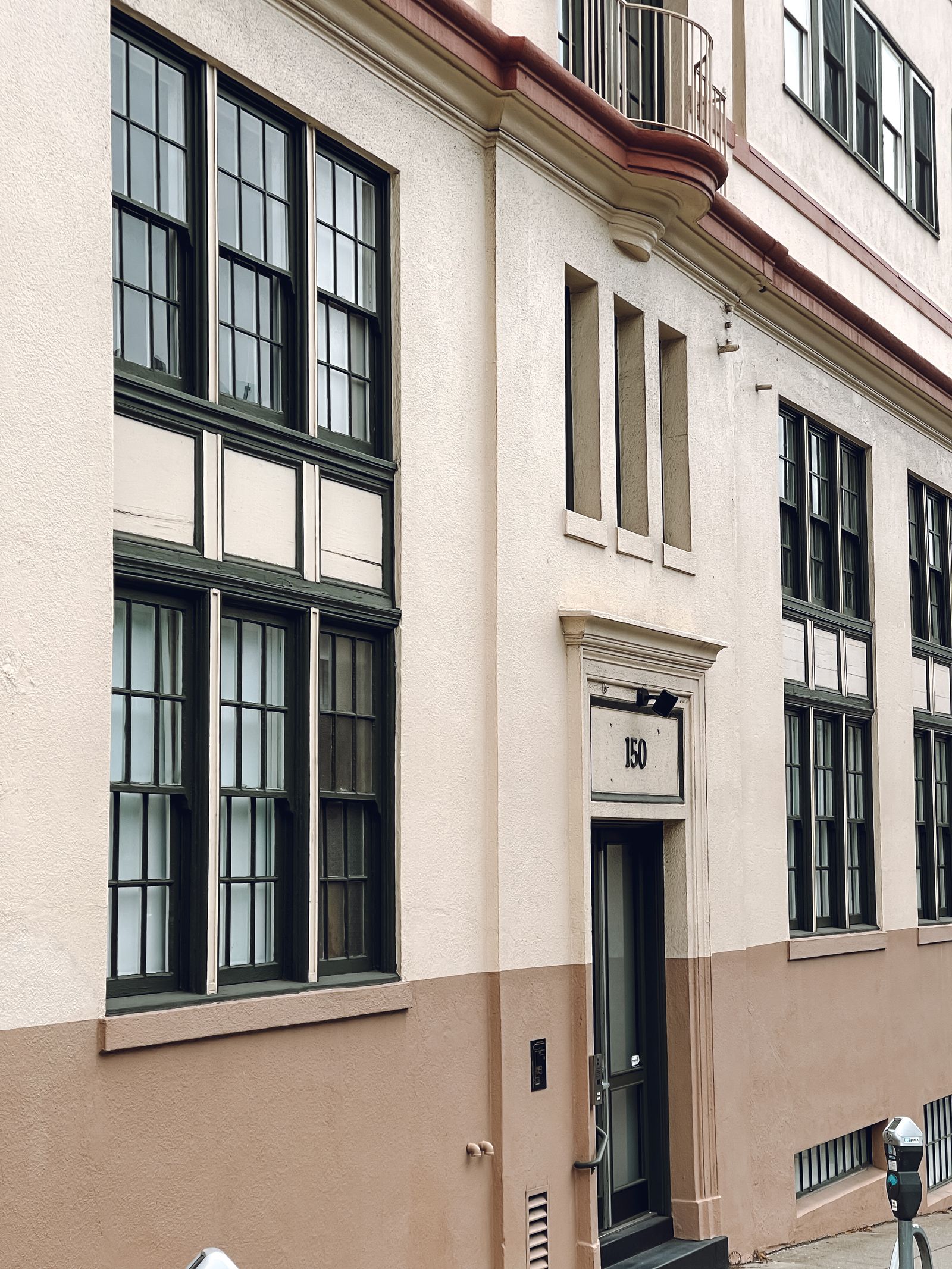
San Diego commercial properties often combine stucco, painted block, tilt-up concrete, metal panels, storefront glass, tile, stone, wood accents, signs, and sealed joints. A hotel near the waterfront may place salt film and guest traffic beside balconies, patios, valet lanes, and glass. A biotech or healthcare campus may have controlled doors, air intakes, landscaped courtyards, and sensitive operating areas. A defense or aerospace facility may add security rules, fenced boundaries, loading zones, and limited photography. A neighborhood retail center in North Park, Clairemont, or Chula Vista may need work around pedestrians, storefront hours, parking circulation, and public sidewalks.
Soft washing can be appropriate for compatible organic film, pollen, bird residue, atmospheric soil, and some loose coastal staining after inspection and a controlled test. It will not repair failed paint, cracked stucco, failed sealant, corroded metal, hard-water scale, efflorescence, oxidation, leaking roof edges, or damaged tile. A dark band below a parapet may point to drainage or flashing rather than a washing problem. The scope should explain what is cleanable, what may remain, and which conditions belong with a repair trade so the property team can make a sound decision.
- Map stucco, masonry, concrete, tile, stone, glass, metal, wood, and sealants by elevation.
- Separate salt film, organic growth, bird residue, dust, mineral scale, oxidation, and substrate damage.
- Define whether the goal is a guest-ready appearance, tenant turnover, inspection support, or routine maintenance.
- Record delicate finishes, water-sensitive equipment, and repairs outside a cleaning scope.
Schedule around San Diego's occupied business districts
Downtown, the Gaslamp Quarter, Little Italy, East Village, and the waterfront can place pedestrians, restaurants, hotel arrivals, deliveries, outdoor seating, and public sidewalks directly beside the work zone. A hotel or convention property must consider check-in, valet movement, events, housekeeping, pool areas, and the guest view of the facade. Work near Harbor Drive, Embarcadero, or the cruise and visitor areas may also face wind, bicycles, tour groups, and limited staging. The quote should identify barriers, spotters, entrance handback, parking restrictions, delivery windows, and a property contact who can pause the work when operations change.
In Mission Valley, UTC, La Jolla, Kearny Mesa, Sorrento Mesa, and Rancho Bernardo, offices, laboratories, healthcare facilities, retail centers, schools, and industrial users may share drive aisles and loading areas. A biotech site may need coordination around clean operations and rooftop equipment. A hospital or outpatient center may need patient transport, emergency access, and air-intake protection. A university facility near UC San Diego may need a plan around class changes, campus events, service roads, and security rules. The written sequence should explain hose crossings, staging, work windows, pedestrian controls, and when each customer route returns to service.
Before scheduling, confirm water access, building keys, tenant notice, security requirements, irrigation, roof drains, HVAC intakes, loading windows, neighboring walls, accessible routes, and vehicle circulation. A phased elevation plan can preserve the main entrance while crews work on less visible sides. That level of detail makes a quote useful to a facilities manager instead of merely naming a cleaning method.
Account for salt, UV, dry heat, and seasonal rain
Salt aerosol can settle on railings, window frames, painted panels, signs, canopies, and glass near Ocean Beach, Pacific Beach, Mission Beach, La Jolla, Point Loma, and the harbor. Marine humidity can keep shaded north-facing walls damp longer, while trees and irrigation create pollen and organic film. Inland properties in Kearny Mesa, Mira Mesa, Otay Mesa, and the broader East County area may receive more dust, dry residue, heat, exhaust, and irrigation overspray. These conditions do not make every dark streak the same problem. Inspection should connect deposits to wind exposure, shade, vegetation, bird activity, roof drainage, HVAC discharge, and the material underneath.
San Diego's bright, dry periods can heat west-facing walls, metal panels, roof edges, and paved staging areas quickly. Heat changes dwell time, drying, visual uniformity, worker exposure, and the amount of facade that can be controlled at once. A smaller work zone or an earlier schedule may be appropriate on a hot elevation. Rain is seasonal, but a storm can mobilize roof-edge soil, affect traction, change runoff, and leave a building wet when a business needs it open. Wind near the coast or a tall upper elevation can also make aerial work unsuitable even when the calendar looks favorable.
The maintenance record should note which elevations resoil first and whether the source is salt, irrigation, roof drainage, trees, exhaust, bird activity, or site traffic. Cleaning cannot correct a blocked drain, failed downspout, leaking sealant joint, or defective irrigation head. Documenting the source condition helps the facilities team decide whether recurring facade care or a repair project is the better next step.
Use aerial support selectively for broad upper elevations
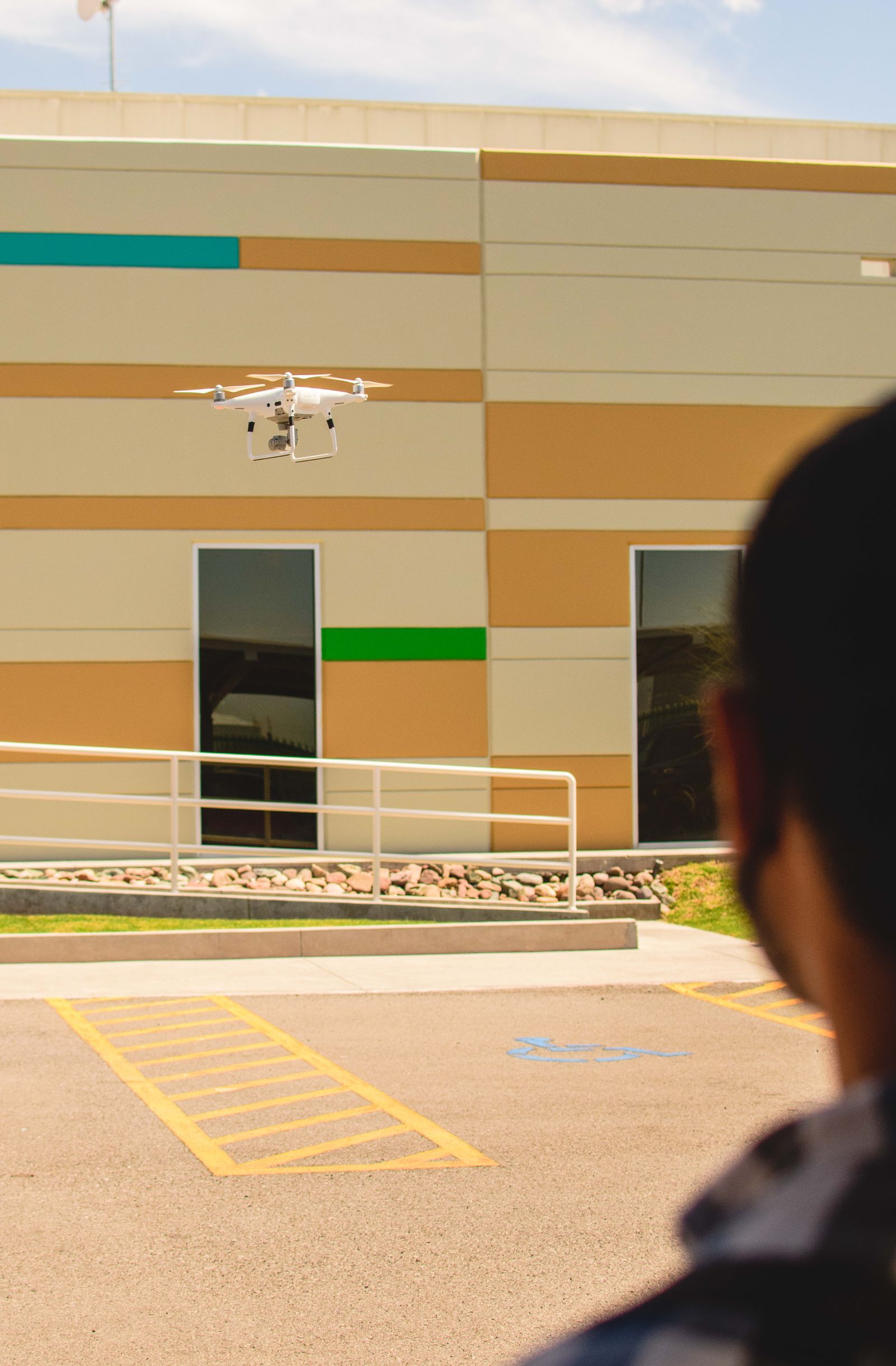
Drone-assisted application or rinsing may support a broad upper stucco, masonry, concrete, or compatible panel elevation when there is clear visual control, safe stand-off distance, a secure launch and recovery area, manageable wind, water access, and a protected ground zone. It may reduce some lift repositioning for a hotel, office, healthcare building, campus facility, or warehouse. It is not a replacement for contact access everywhere. Upper glass requiring a squeegee finish, recessed trim, bonded deposits, scraping, close inspection, delicate ornament, or repair still may require a pole, lift, roof access, or hand work.
San Diego International Airport operations, Naval and defense facilities, power lines, mature trees, cranes, highways, public sidewalks, rooftop equipment, and adjacent occupied parcels can affect an aerial plan. Commercial small-UAS operations must follow current Federal Aviation Administration requirements, including applicable certification, registration, airspace, visual-control, and operations-near-people rules. Property permission does not resolve aviation requirements. A proposal should state where aerial support is contemplated, weather limits, the spotter plan, the ground exclusion area, and the grounded method used if conditions change.
The finish should determine the equipment. A drone may wet or rinse a broad upper wall while a ground team protects doors, watches runoff, manages pedestrians, and completes detailed work by another method. It cannot squeegee glass, scrape bonded scale, repair a crack, replace sealant, or assess a hidden failure from a distance. We will identify the aerial and contact-access portions before a San Diego owner approves the scope.
Protect drainage, landscaping, access, and sensitive operations
Before washing, trace roof drains, downspouts, curb inlets, trench drains, parking slopes, landscaped beds, irrigation heads, doors, air intakes, electrical equipment, pool areas, public sidewalks, accessible travel, and neighboring parcels. A sloped Mission Valley lot may move water toward a low inlet. A coastal hotel may carry flow toward a promenade or harbor-side drain. A retail property may send rinse water across a shared drive aisle. A visible grate is not automatic permission to discharge wash water, and a planted bed is not an approved disposal location without site-specific confirmation.
The proposal should state the water source, application and rinse assumptions, product and soil considerations, expected flow, protection or recovery, and the stop condition if water travels differently than planned. Controls may include dry cleanup, reduced flow, temporary diversion, inlet protection, monitored recovery, filtration, or an approved disposal arrangement. Product labeling alone does not prove that runoff is acceptable at a particular property. Healthcare, hospitality, campus, food, laboratory, and public-access sites deserve especially clear controls before work begins.
Protect landscaping, open doors, HVAC intakes, pool equipment, vehicles, signs, merchandise, patient and guest routes, and tenant operations. Closeout should include dry-condition photos, completed elevations, controls removed, access returned to service, and remaining deposits or source conditions documented. That record supports a sensible maintenance interval and makes recurring staining easier to diagnose.
- Trace each work zone to its actual low point before applying product or rinse water.
- Confirm water access, protection, recovery, and disposal assumptions in writing.
- Coordinate guest, patient, student, employee, delivery, accessible, and public routes.
- Stop when wind, heat, rain, occupancy, traffic, airspace, equipment, or flow makes the plan uncontrolled.
Build a service plan around the property's business goal
A one-time project may support a hotel event, healthcare inspection, lease tour, ownership visit, tenant turnover, campus opening, retail reset, restaurant patio refresh, or renovation handoff. Prioritize the main entrance, canopy, sign band, parking-facing wall, and the elevations most visible to guests, patients, employees, students, customers, or prospective tenants. A phased first visit can improve public-facing areas before an owner commits to less visible walls, loading areas, or a broader maintenance plan.
Recurring care may make sense where salt, shade, pollen, irrigation, bird activity, hospitality standards, or high pedestrian visibility create predictable resoiling. The interval should come from observed condition, prior results, weather, access, budget, and the operating calendar. A property may separate entrance and canopy work from upper facade washing, glass detail, loading areas, or production-adjacent surfaces. It should not be assigned a schedule only because it is in San Diego; the property record should support the frequency and scope.
Send the address, building height, facade materials, photos, target date, water access, operating hours, and known runoff or access restrictions. Include whether the priority is a guest-facing elevation, a full exterior reset, recurring care, or an inspection-ready appearance. Call +1 239-351-2897 or email contact@dronebuildingcleaners.com to get in touch and request a quote that separates included washing from repairs or specialty detail work.