Define a useful result before selecting pressure or chemistry
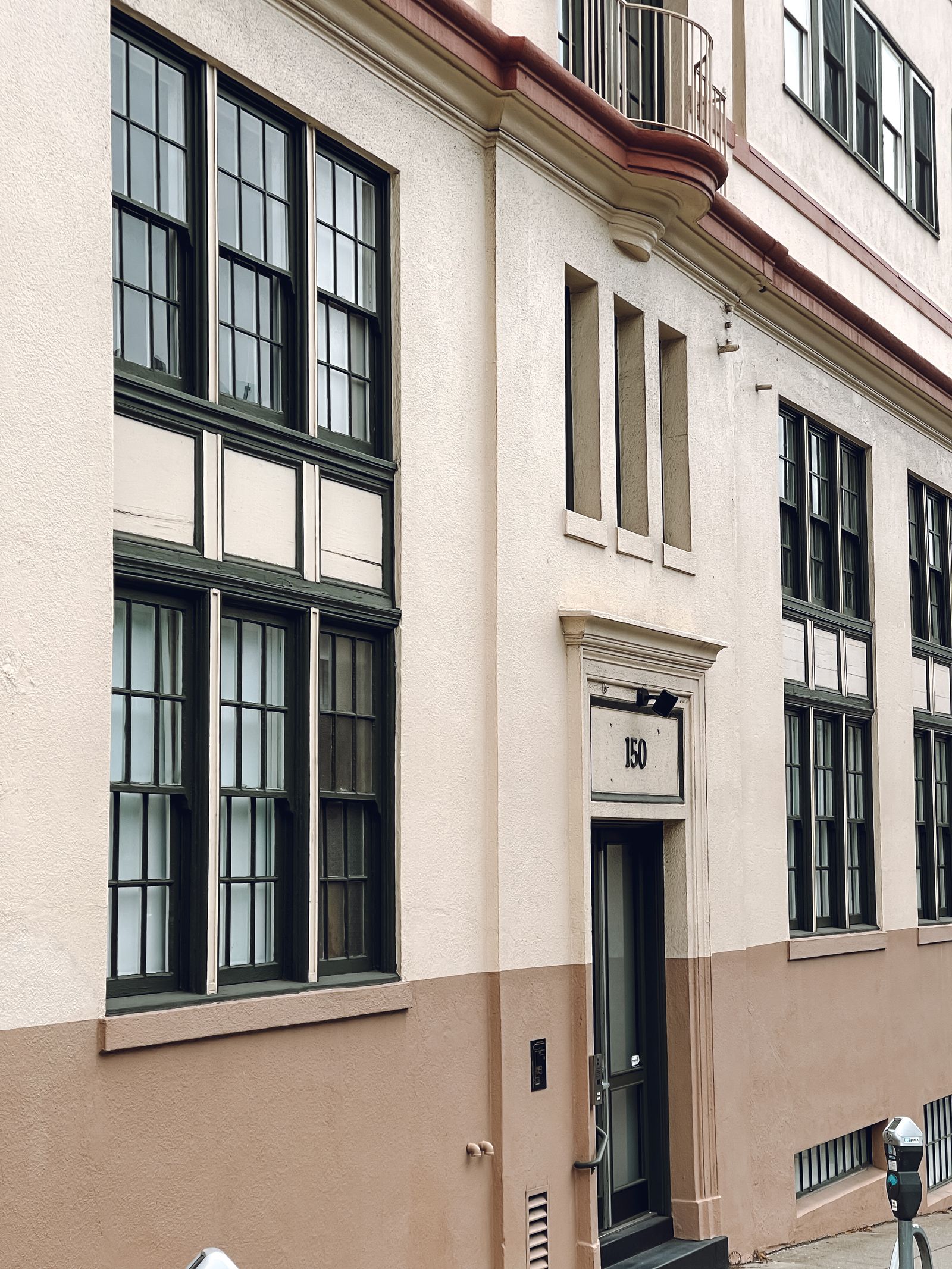
A pre-service review can record apparent substrates, coatings, previous repairs, sealant joints, glazing, mullions, signs, lighting, vents, louvers, utility equipment, canopies, and visible distress. It should also note changes between elevations. A south- or west-facing finish exposed to strong sun may not behave like a sheltered courtyard wall, even when both appear to use the same product. Manufacturer maintenance instructions, available construction records, product labels, safety information, and a representative test area provide better guidance than color alone. Test areas should be reviewed after drying because a wet facade can temporarily mask uneven weathering or remaining deposits.
The written objective might be a maintenance wash that reduces compatible surface soil from normal viewing distance. It should not quietly expand into paint restoration, masonry restoration, leak investigation, glazing repair, sealant replacement, or a formal facade assessment. Detailed glass cleaning also deserves its own definition. A controlled rinse can improve loose soil on glazing, but it is not automatically equivalent to hand agitation and squeegee detailing, nor does it promise removal of hard-water scale or construction residue. Clear boundaries let the service team use a gentler process where appropriate and refer specialized conditions instead of escalating pressure.
- Name the apparent soil and the intended maintenance result.
- Record materials, coatings, openings, repairs, and visible distress by elevation.
- Use a dry review of a representative test area when compatibility is uncertain.
- Keep cleaning separate from restoration, repair, inspection, and material diagnosis.
Let Los Angeles building context shape the work zones
Los Angeles is not a single facade environment. Downtown alone includes the Financial District, Historic Core, Arts District, Fashion District, Little Tokyo, Chinatown, Civic Center, and other areas recognized in the City's Downtown Community Plan. Broad tower elevations, older masonry, converted industrial buildings, active storefronts, loading streets, residential entrances, and narrow service alleys can occur within a short distance. The neighborhood name does not select a cleaning method, but it signals the need to inspect staging space, public interfaces, facade character, and how water could move from the wall to grade.
Hollywood and the Wilshire corridor introduce another mix of entertainment uses, hotels, apartments, offices, retail, signage, outdoor customer areas, and buildings with finishes from different construction periods. Koreatown properties can have intense ground-floor activity and multiple residential or commercial entrances. Westwood and West Los Angeles may involve medical, institutional, office, multifamily, and neighborhood-serving retail sites. Venice combines coastal exposure, compact commercial activity, mixed-use properties, and a planning context that includes a certified coastal land-use plan. These descriptions are planning prompts, not claims about any specific address. Each parcel still needs its own access, material, and jurisdiction review.
The San Fernando Valley adds campuses, warehouses, production properties, shopping centers, hotels, offices, and low-rise commercial corridors across North Hollywood, Van Nuys, Encino, Sherman Oaks, Canoga Park, and Woodland Hills. San Pedro and Wilmington include port-adjacent and industrial contexts as well as neighborhood commercial buildings. A large open lot may simplify one part of staging while adding truck circulation, security, or industrial-residue questions. A compact storefront may be easy to reach from grade but difficult to isolate from customers. The service plan should divide the address into practical work zones instead of treating building height as the only measure of complexity.
Choose chemistry for the assembly, not for the city
Soft washing depends on chemical and physical controls working together. Product selection, dilution, application volume, dwell time, surface temperature, rinse quality, wind, and overspray protection can all affect the outcome. A solution compatible with one painted surface may discolor another finish or react with nearby metals. Porous masonry may hold liquid differently from sealed concrete or metal panel. EIFS, stucco, stone, brick, precast concrete, glazing systems, coated aluminum, painted signs, and sealants should not be grouped under a single facade label. The process should follow available material guidance and the actual test response.
Los Angeles sunlight and heat can change how quickly a solution dries on an exposed wall. Rapid drying may shorten useful dwell, leave residue, or encourage repeated application when the better decision is to move the work window. Shade can change during a long elevation, and reflected heat from pavement or glazing may affect both the surface and the crew. The plan should establish manageable section sizes, confirm rinse readiness, and stop when temperature or evaporation prevents control. Cal/OSHA publishes heat-illness requirements for outdoor workplaces; the contractor remains responsible for its worker-safety program and should coordinate any resulting pauses or schedule changes with the property.
- Review each substrate, coating, sealant, and adjacent finish independently.
- Set application volume, dwell, rinse, and section size from test behavior.
- Account for solar heating, rapid drying, and reflected heat in the work window.
- Monitor protection so it does not trap heat or redirect wash water unexpectedly.
Make water efficiency part of the cleaning design
Drought-conscious planning is more than a marketing label. The Los Angeles Department of Water and Power publishes the City's current water-conservation ordinance information, including prohibited uses and operating limits that customers should review. A commercial cleaning plan should confirm the approved water source, current restrictions affecting the property, connection and backflow arrangements handled by the appropriate parties, and how the method will avoid unnecessary flow. The applicable status can change, so a proposal should point to current official information instead of relying on a remembered drought phase.
Water use and wash-water disposal are related but separate decisions. Conservation does not make runoff acceptable, and capture does not excuse avoidable consumption. The team should estimate the expected application and rinse volume, identify where water will collect, and size recovery controls for that estimate with contingency capacity. If a broad elevation cannot be cleaned without uncontrolled flow or excessive repeat rinsing, a smaller work zone, alternate process, direct-contact method, or postponement may be the responsible choice. Any water-saving claim should be based on the proposed method and measured job records rather than a universal percentage.
Treat wash water as a planned waste stream
Once cleaning water contacts a facade, it can carry soil, treatment product, paint or coating particles, bird residue, metals, salts, oils, and material from ledges or adjacent pavement. The route from wall to drain should be mapped before application. Useful observations include roof and balcony drains, downspouts, trench drains, area drains, curb inlets, landscaped areas, low points, property lines, cracked pavement, and connections described by facility records. A grate's appearance does not establish where it leads, and a landscaped strip should not be assumed to be an acceptable disposal area.
LA Sanitation guidance for mobile washers directs operators to prevent industrial wastewater from entering the storm-drain system, collect it, and use an appropriate sewer-discharge route. The City's pollutant-discharge controls also address untreated wastewater from mobile commercial or industrial operations and runoff from washing impervious surfaces. Those sources support conservative planning, but they do not provide automatic permission for any particular connection. Proposed sanitary disposal, pretreatment, collection, transport, or off-site acceptance should be confirmed for the actual waste stream and property with the responsible authority. This page is operational guidance, not a permit or legal opinion.
Controls may include dry cleanup before washing, reducing application at the source, temporary berms, inlet protection, a monitored sump, vacuum recovery, sediment separation, holding tanks, and an approved disposal arrangement. Each control has limits. An inlet cover can leak or shift, a filter may remove particles without removing dissolved constituents, and a tank can be overwhelmed by an inaccurate volume estimate. The crew should watch secondary flow paths and pause at the first sign of bypass. The closeout record should identify the controls used and the disposal documentation available, without claiming that documentation by itself proves regulatory compliance.
- Trace expected flow from each elevation before applying water.
- Do not infer drain destination or disposal permission from appearance.
- Size recovery and storage for estimated volume plus a practical contingency.
- Pause for bypass, unexpected residue, rising containment, or a changed waste stream.
Use aerial delivery only where the whole operating area works
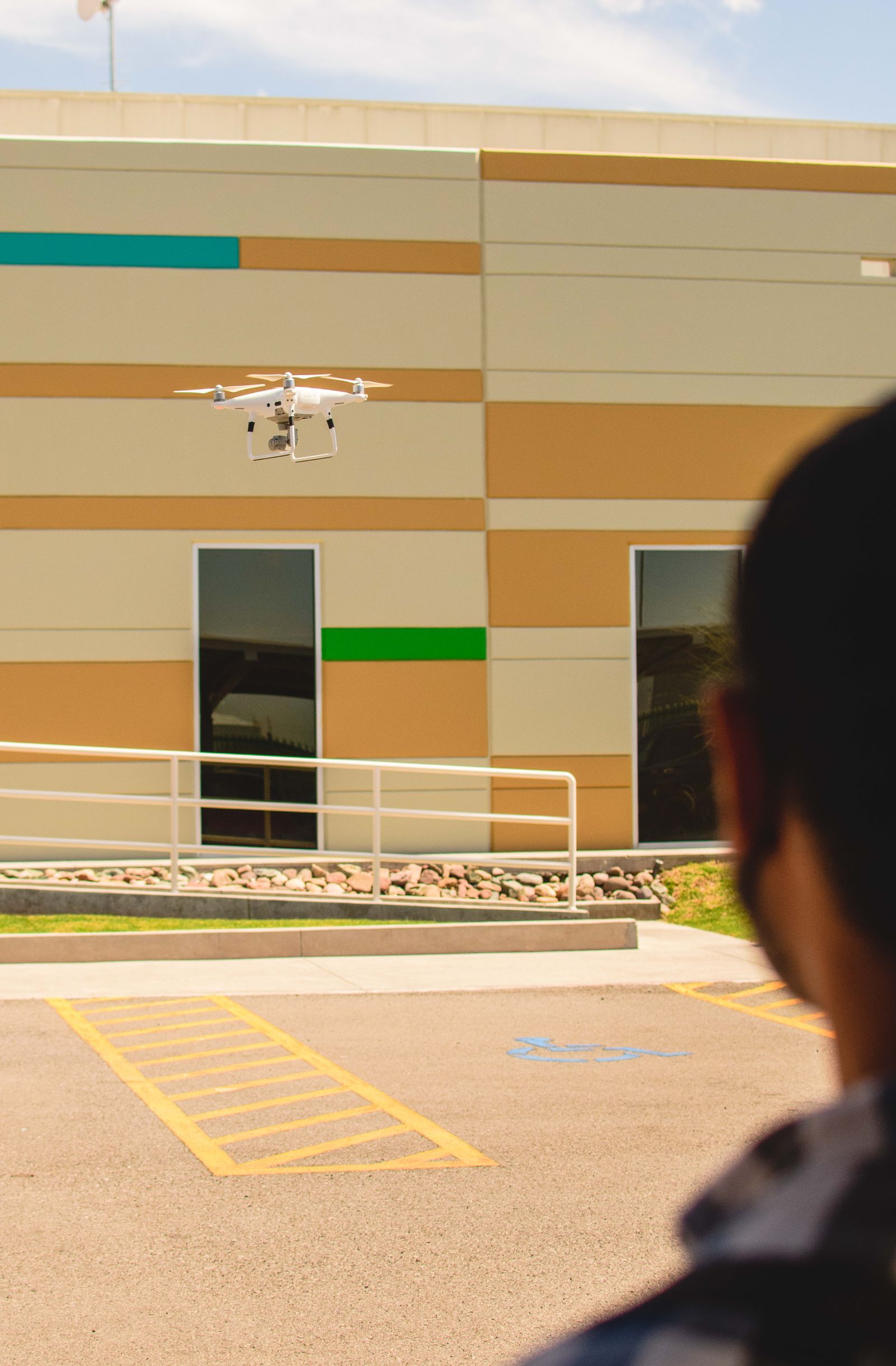
Drone-assisted soft washing can be useful where a broad compatible facade has clear stand-off space, manageable hose routing, visual line of sight, a controlled launch and recovery area, and a ground zone that can be protected. It may reduce repeated lift positioning on selected elevations. Los Angeles geometry can also defeat that advantage. Utility lines, palms and other mature trees, signs, narrow alleys, rooftop equipment, balconies, overhead structures, recessed walls, adjacent towers, hillside terrain, and traffic can block sight lines or create an unsuitable flight or spray path.
Commercial drone operations require a flight plan distinct from the cleaning method. The FAA's Part 107 resources address certification, airspace, operating limitations, visual line of sight, operations over people and moving vehicles, and circumstances that may require authorization or a waiver. Los Angeles contains busy airports and varied controlled-airspace conditions, so ownership or permission to clean a property does not settle the aviation question. The operator should review the proposed location and operation using current FAA information, establish ground controls and emergency procedures, and provide a non-drone method for excluded zones.
Coordinate an occupied Los Angeles property block by block
A commercial building often remains open during exterior care. The work plan should map tenant and visitor entrances, accessible routes, emergency access, loading positions, valet or rideshare activity, parking circulation, outdoor dining, transit-facing edges, service yards, and neighboring property. Hoses, tanks, barriers, wet surfaces, overhead application, and launch activity all need physical space. A narrow sidewalk or busy retail frontage may require smaller zones, spotters, a protected path, or a different schedule. Cones alone do not resolve a conflict with ordinary public movement.
The property contact can identify delivery peaks, shift changes, school or medical activity, hotel arrivals, filming or event schedules, retail opening periods, security procedures, and areas that cannot be interrupted. A Downtown loading street, a Hollywood venue frontage, a Koreatown mixed-use entrance, a Venice customer area, and a Valley warehouse yard will not share one ideal work window. The plan should use property information rather than promising a guaranteed response or completion time based on neighborhood. Weather, airspace, access, water controls, and operating needs can all change the workable sequence.
Closeout should be as specific as setup. The service record can show elevations completed, test results, exclusions, access methods, water controls, photographs, and observations referred for follow-up. It should not diagnose cracks, leakage, corrosion, loose material, or coating failure. Potentially unsafe or defective conditions belong with the property manager and an appropriate qualified professional. Cleaning improves compatible surface conditions; it does not restore failed assemblies, certify the facade, or replace inspections and maintenance required for other purposes.
- Preserve agreed entrances, accessible travel, emergency access, and tenant operations.
- Coordinate deliveries, security, events, and public-facing uses before mobilization.
- Keep wet surfaces, hoses, aerial activity, and recovery equipment inside controlled zones.
- Document exclusions and refer suspected defects without diagnosing them.